


Game info
Endless runner, Arcade
Learn original Temple Run gameplay, swipe-and-tilt controls, obstacle timing, coin strategy and objective scoring, with official Imangi resources.
About Temple Run
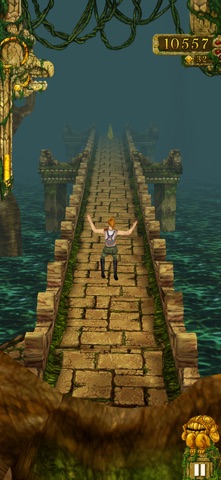
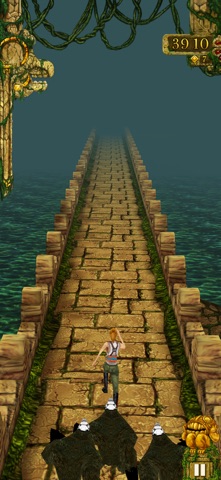
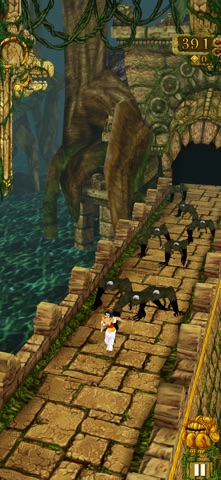
Temple Run is an endless running game about escaping with a stolen idol while Demon Monkeys pursue you through an ancient temple. Turn around corners, jump broken stretches of path and slide beneath obstacles without losing the rhythm of the run. The appeal is the changing sequence: the action that clears one hazard may leave you preparing immediately for a different one.
Imangi Studios created Temple Run and built the original game around quick directional gestures, coin collection and objectives. A strong attempt begins with reading the route rather than chasing every reward. Learn the difference between a jump, a slide and a turn, then connect them into short sequences you can repeat. The sections below cover original Temple Run gameplay, mobile controls, scoring and practical ways to extend a run without relying on frantic input.
Gameplay Overview: The Original Temple Run
The original Temple Run begins with a cursed idol and a flight from Demon Monkeys through temple paths, bridges and jungle ruins. Its movement combines turns, jumps and slides rather than relying on one universal dodge. A gap asks for take-off timing; a bend asks for a directional decision; a low obstacle asks for the appropriate evasive move before contact.

Consider a gap followed by a corner. Recognise the gap, jump from a stable approach, land and turn toward the next path. Staring at the gap throughout the flight delays recognition of the corner. Look beyond the obstacle as soon as the first action is underway. The official Temple Run App Store listing introduces the escape, running actions, coins and character unlocks. Use those mechanics together: collect rewards when the running line is safe, and keep the next required movement in view.
Gameplay Overview: How to Play
Begin with the original game’s opening tutorial and practise one deliberate swipe for each required action. Swipe up to jump, down to slide and left or right to turn when the path changes direction. Tilt the device to adjust lateral position for a coin line while keeping an eye on the running surface.
For an early session, survival is a better objective than collecting every coin. Watch how far the runner travels between beginning a jump and reaching a gap. If it fails, compare the take-off point with the broken path instead of making several hurried swipes on the next attempt. Once the opening jump feels predictable, read the following corner before landing. The useful improvement is arriving at that second decision with enough time to choose the correct turn.
Gameplay Overview: Temple Run Mobile Controls
Temple Run’s original mobile controls combine swipes with device tilt. An upward swipe initiates a jump; a downward swipe initiates a slide; horizontal swipes turn at corners. Tilt changes the runner’s lateral position, which helps line up with coins while the route continues forward. Keep the device comfortable and the gestures distinct so a diagonal movement does not blur your intended action.
Practise the two control jobs separately. First clear the opening route without trying to optimise every coin. Then add small tilt adjustments on a straight section, returning your attention to obstacles before the next bend. If you need the official Android release, Temple Run on Google Play provides its download and device information. Clear gesture timing and early route recognition matter more than large, repeated movements across the screen.
Gameplay Overview: Pro Tips
Prioritise the running surface before its rewards. A coin line can help you see the route, but it should not pull your eyes away from an upcoming gap or bend. When two hazards follow each other, make the first movement as calmly as possible so that your attention is available for the second.
Keep these practical Temple Run tips in mind:
- Look past the runner toward the next required action.
- Use one deliberate input for an obstacle, rather than a burst of uncertain presses.
- Allow room for the landing before planning another jump.
- Leave optional coins when they compete with a necessary turn.
- After a failure, name the obstacle and whether your action began too early or too late.
That final observation gives the next run a specific adjustment. “Jump a little earlier at the broken section” is more useful than simply deciding to be faster.
Key Features
Temple running mixes several kinds of obstacle timing. A broken stretch tests whether the jump begins in the right place. A corner tests whether you recognise the route change before reaching the edge. A low hazard asks for a different response from an open gap. Recognising the obstacle type early is more useful than trying to perform every movement as quickly as possible.
Combine those actions into small sequences. For a gap followed by another obstacle, decide where the first landing should leave the runner. For a turn after a coin line, stop treating the coins as the main target before entering the bend. Use a familiar opening to compare an earlier jump, a calmer landing or a cleaner turn. Then build the longer Temple Run attempt from those repeatable movements.
Advanced Tips: Make Turns Predictable
A corner becomes much easier when you recognise its approach as early as a gap. Look at the direction of the path beyond the bend and prepare the required action while the runner is still on a stable section. Avoid using the last stretch before the corner to make an unnecessary coin adjustment.
A useful drill is to give a bend one consistent visual cue. It might be the point where the side of the path changes direction or where the next stretch becomes visible. On several attempts, use that same cue and compare the outcome. If the game rejects the turn, adjust the cue slightly instead of changing your whole approach. This makes cornering a repeatable running skill, particularly when the path immediately follows the bend with another obstacle.
Modes and the Goal of a Run
A distance attempt and a score-focused objective are not quite the same challenge. Staying alive extends the run, while pursuing an optional reward can demand a route adjustment. Decide which objective matters before taking a risk for a coin line. If a detour repeatedly ends the run, practise the normal route before adding that collection task.
In the original Temple Run, completing objectives also contributes to the score multiplier. This adds a longer-term purpose beyond surviving one extra corner. Think of an objective as a specific action to accomplish during the running, not permission to ignore the nearest hazard. Some native challenge activities also depend on online access, even though the downloaded base game can be played offline. Those objective and challenge systems are distinct from the immediate keyboard-running session above.
Characters, Coins and Upgrades in the Official Game
The original Temple Run uses coins and unlockable heroes alongside power-up upgrades. Separate their jobs before spending currency: choosing a character changes the runner you use, while an upgrade description explains a particular power-up benefit. Neither is a substitute for learning when the next turn or jump must begin.
Imangi explains the native scoring relationship in its official Temple Run FAQ: running, coin collection and bonus actions contribute points, and the score multiplier is applied to those points. Completing an objective adds to that multiplier. As an illustrative calculation, a hypothetical 100 base points at a multiplier of 3 would contribute 300 points; it is not a fixed reward for any particular obstacle. This explains why an objective can matter beyond the visible coin total. Practise the required movement safely, then use the native objective screen to decide which task to pursue next.
Advanced Tips: Manage Your Attention
Most avoidable failures in a fast runner begin before the collision. The eyes follow a reward, the player starts a long input sequence without checking the next landing, or a surprising obstacle leads to several competing presses. Work on the moment your attention leaves the route, not just the final image of the crash.
Try reading three things in order: the next movement you must make, the surface you will occupy afterwards and the first hazard beyond that surface. You do not need to predict the entire course. This short planning window is enough to reduce last-second corrections. If the screen becomes too busy, simplify the attempt by ignoring optional rewards for a few runs. Once the running line feels clear, add coin collection without changing the movement rhythm that already works.
A Short Practice Routine
Use three short attempts as a practical warm-up. In the first, concentrate on the opening jump and ignore coins. In the second, keep the same jump timing and look for the next turn as soon as you leave the ground. In the third, try to repeat both decisions without adding an unnecessary correction.
At the end, record one observation in ordinary language: “the jump was late,” “I watched the coins through the turn,” or “I landed safely but did not read the next gap.” Choose one adjustment for the following attempt. This keeps Temple Run-style practice connected to visible events, rather than turning every failure into a vague reaction-speed problem. Stop the exercise when you can explain the opening sequence and perform it more than once.
Similar Games
Temple Run belongs to the endless-runner genre, where automatic forward movement makes obstacle recognition and timely actions the central challenge. If you enjoy the escape setting, Temple Run 2 is another Imangi release with its own environments and progression. A new course gives you another reason to practise reading a landing and the next obstacle as one sequence.
The related-game collection below offers more running and jumping activities. Choose a title by the movement problem you want to practise: recognising turns, timing jumps or controlling a different kind of obstacle route. Start any new game with its opening tutorial rather than assuming identical movement distances. That keeps the skill you are developing clear while allowing a different course to supply a fresh challenge.
Browser games in this collection
- Temple Run 2: Spooky Summit — A source-listed Temple Run 2 variation with a spooky mountain-temple setting and a continuous guardian chase.
- Relic Runway — A ruin-escape runner with a pursuing guardian, obstacle lanes, coins and collectible relic pieces.
- Tomb Runner — An endless temple runner with traps, gems and a source-described unlockable cast including Professor Jones and Lara Bones.
- Lumen Ruin Runner — An arcade route with hazards, energy pickups and a level endpoint. Its stage structure differs from an endless-run distance challenge.
- Speedy Runner — A single-tap obstacle runner whose catalogue instructions mention coins and temporary power-ups, including a jetpack.
- Gravity Glitch — A one-button runner that swaps the character between floor and ceiling. It shares reaction timing with a jetpack game, while its movement rule is different.
History and Updates
Imangi Studios dates the original Temple Run to 2011 and Temple Run 2 to 2013. The original helped establish the continuous temple-escape format: steal the idol, keep running and turn simple gestures into a longer sequence of successful evasions. Its characters and progression give players reasons to return beyond a single distance attempt.
For a gameplay video, look at the movement challenge rather than its score alone. Is the runner approaching an open gap, a low obstacle or a turn? Where does the action begin, and what follows the landing? Those observations are useful when refining your own Temple Run timing. For product changes and supported downloads, use Imangi’s official information instead of a fixed list of temporary rewards. The lasting skill is recognising the next required move before reaching the hazard.
Your Next Run
Begin the next Temple Run attempt with a simple target: reach the next obstacle with the correct movement already decided. Use a clear swipe, watch the landing and shift attention toward the following bend. Add coin collection only when it fits that running line.
For a longer run, resist changing everything at once. Keep one reliable opening sequence, leave a distracting coin line when needed and use a failure to identify one late or unnecessary action. Temple Run becomes more satisfying when a section that once seemed frantic becomes a route you can read. A cleaner jump, an earlier glance toward a corner or a smaller tilt adjustment is useful progress. Repeat the movement until it feels dependable, then carry that rhythm into the next unfamiliar stretch.
Frequently asked questions
What is Temple Run?
Temple Run is Imangi Studios’ endless running game about escaping with a stolen idol while avoiding hazards on temple paths, bridges and jungle routes.
What are the original Temple Run controls?
Swipe up to jump, down to slide and left or right to turn at corners. Tilt the device to adjust the runner’s lateral position.
What should a beginner practise first?
Learn a clear jump, slide and turn before chasing every coin. Recognise the next obstacle early enough to choose the right movement.
Why can I crash immediately after clearing a jump?
The landing may lead directly toward another obstacle or corner. Look beyond the gap once the jump begins so the next movement is prepared before the runner reaches it.
Should I collect every coin in Temple Run?
No. Choose a safe running line first. Leave coins that distract from an upcoming turn or put the runner in a poor position for the next obstacle.
How do objectives affect the original game’s score?
Imangi explains that completing objectives increases the score multiplier. Running, coin collection and bonus actions contribute points that are multiplied as the run progresses.

Good game? Tell us.0
Share a tip, celebrate a high score, or tell us what you think. Keep it friendly.